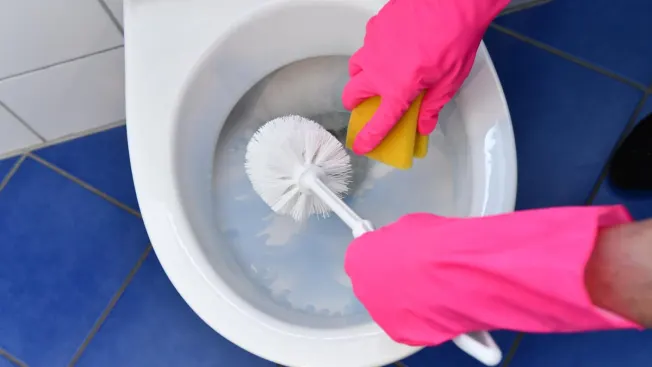
Most toilet brushes hold up for six to twelve months with normal care, but the calendar is not the real test. A brush used daily in hard water, or one that gets shoved back into a wet holder after every use, can be finished in half that time. A brush cleaned and dried properly can outlast a year. The honest answer is not a number of months. It is three things you can check on the brush in front of you right now: the bristles, the base, and the smell.
If any one of those three fails, the brush is done, whatever the calendar says.
Why the Replacement Window Is So Wide
Cleaning-industry guidance and consumer sources consistently land in the same range, six to twelve months for a brush that is rinsed and dried between uses, weekly deep-cleaned, and stored somewhere it can actually dry out. That is a wide window because the variables that shrink it are all things that happen in your specific bathroom, not in a lab.
Three factors do most of the damage:
- Bristle material. Traditional nylon bristles splay and lose stiffness faster than the newer silicone-headed brushes, which resist bending but can trap residue differently at the base.
- Water hardness. Hard water leaves mineral deposits that stiffen and coat bristles, making them scrape rather than scrub, and that buildup happens faster in hard-water regions regardless of how often you clean the brush itself.
- Wet storage vs. dry storage. A brush that goes straight back into a closed holder while still dripping never fully dries between uses. That is the single biggest accelerant to bristle breakdown and odor, more than frequency of use.
Two households using the same brush model can get very different lifespans out of it for exactly these reasons. That is why "how many months" is the wrong first question.
The Three Signs It Is Actually Time
Skip the math. Look at the brush.
- The bristles are bent, splayed, or falling out. Once nylon bristles lose their original shape and stay that way after drying, they no longer make firm contact with the bowl. A brush that "misses" spots because the bristles fan out sideways instead of standing up straight is mechanically finished, not just due for a clean.
- There is visible discoloration or a film at the base where the bristles meet the handle. This is the hardest part of the brush to rinse clean, and once it darkens or develops a persistent film that a disinfecting soak does not lift, that is residue built into the material, not surface dirt.
- It smells after it has fully dried. A brush that smells while wet is normal. A brush that still smells musty after twenty-four hours of air-drying is holding onto something a scrub will not remove.
Any one of these on its own is enough. You do not need all three.
Extending the Life You Have Left
Two habits do more for lifespan than any product claim on the packaging.
Rinse and position for drainage after every use. Run the brush under hot water until the visible debris is gone, then leave it propped so water drains off the bristles instead of pooling at the base of a closed holder. A few seconds of drip-drying before it goes back matters more than which brush you bought.
Disinfect on a weekly schedule, not "when it looks bad." A weekly soak (bleach solution or a household disinfectant labeled for the purpose, left for the contact time stated on the product) keeps bacterial buildup from compounding week over week. Waiting until the brush visibly needs it means you are always cleaning a heavier problem than you would be on a fixed schedule.
What Not to Do
Do not spray a cleaner on the brush and set it aside without giving it the labeled contact time. A quick spritz that gets rinsed off in ten seconds has not done the disinfecting work the label promises.
Do not mix cleaning products to "boost" the disinfecting soak. Bleach combined with ammonia-based cleaners or with vinegar produces toxic fumes. If your bathroom cleaning routine already uses one of these, keep the toilet brush soak to that single product and rinse the sink or bucket before switching to anything else.
Toilet Brush vs. the Emergency Question
This article is about routine maintenance and knowing when to retire a brush that is still doing its job. That is a different question from what to do with a toilet brush when the toilet is actually clogged right now. If that is the situation you are in, our guide on whether a toilet brush can unclog a toilet covers that separately, including when a brush genuinely helps and when it just wastes time you do not have.
Quick Reference
| Sign | What it means | Action |
|---|---|---|
| Bristles bent or splayed and staying that way | Mechanical failure, no longer scrubs effectively | Replace now |
| Discoloration or film at the base that a soak will not lift | Residue is embedded in the material | Replace now |
| Musty smell after full drying | Bacterial or fungal buildup the brush cannot shed | Replace now |
| Used daily, hard water, dried between uses | Faster wear even with good habits | Check monthly after month 4 |
| Light use, soft water, weekly disinfecting | Slower wear | Check at the 6-month mark |
FAQ
Is there a hard rule, like "replace every 6 months no matter what"?
No single number applies to every household. Six to twelve months is the range cited across cleaning and consumer sources for a brush that is rinsed, dried, and disinfected regularly. Your actual timeline depends on water hardness and how well the brush dries between uses, which is why the physical checks matter more than a fixed date.
Can I just clean a brush that looks bad instead of replacing it?
If the bristles are still straight and firm and the only issue is general dirtiness, yes, a thorough disinfecting soak usually resolves it. Once the bristles have physically deformed or the base has developed a film a soak will not remove, cleaning no longer fixes the underlying problem.
Does the toilet brush holder need to be replaced on the same schedule?
No. The holder is a separate object with its own failure mode, mainly standing water and residue at the bottom rather than bristle wear, and it should be checked and cleaned on its own schedule rather than tied to the brush's replacement date.
Are silicone toilet brush heads longer-lasting than bristle ones?
Silicone heads resist bending and splaying the way nylon bristles do, which is their main durability advantage. Whether they scrub as effectively depends on the specific design and is a separate comparison from replacement timing.
What if I use the toilet brush only occasionally, like in a guest bathroom?
Light use slows bristle wear but does not eliminate the need to check for smell and residue, since a rarely used brush can sit wet in a closed holder for long stretches between uses, which works against it even without heavy use.
Leave a Reply